Six thoughtful discussions on why America desperately needs to unite and secure energy for the future
06/22/2026 / By Lance D Johnson
The United States is entering a period of enormous electricity demand growth. Artificial intelligence, data centers, manufacturing reshoring, and electrification are all driving this surge. Companies are ready to invest. Workers are ready to build. But the permitting process remains broken. Projects that should take years take decades. Meanwhile China is not waiting. It is securing supply chains and building infrastructure at a pace America cannot match.
Key points:
- Electricity demand growth is accelerating due to AI, data centers and manufacturing expansion.
- Permitting reform remains stalled despite bipartisan acknowledgment of its necessity.
- China is aggressively securing global supply chains while America debates and stays divided on energy policy.
- Infrastructure projects languish for years costing jobs and investment.
- Traditional and newer energy technologies must work together.
- Energy policy must now be tied to national security and economic competitiveness worldwide.
- Decentralizing energy generation and storage through off grid system empower both the individual and protect the grid as a whole.
America needs a constructive energy discussion right now
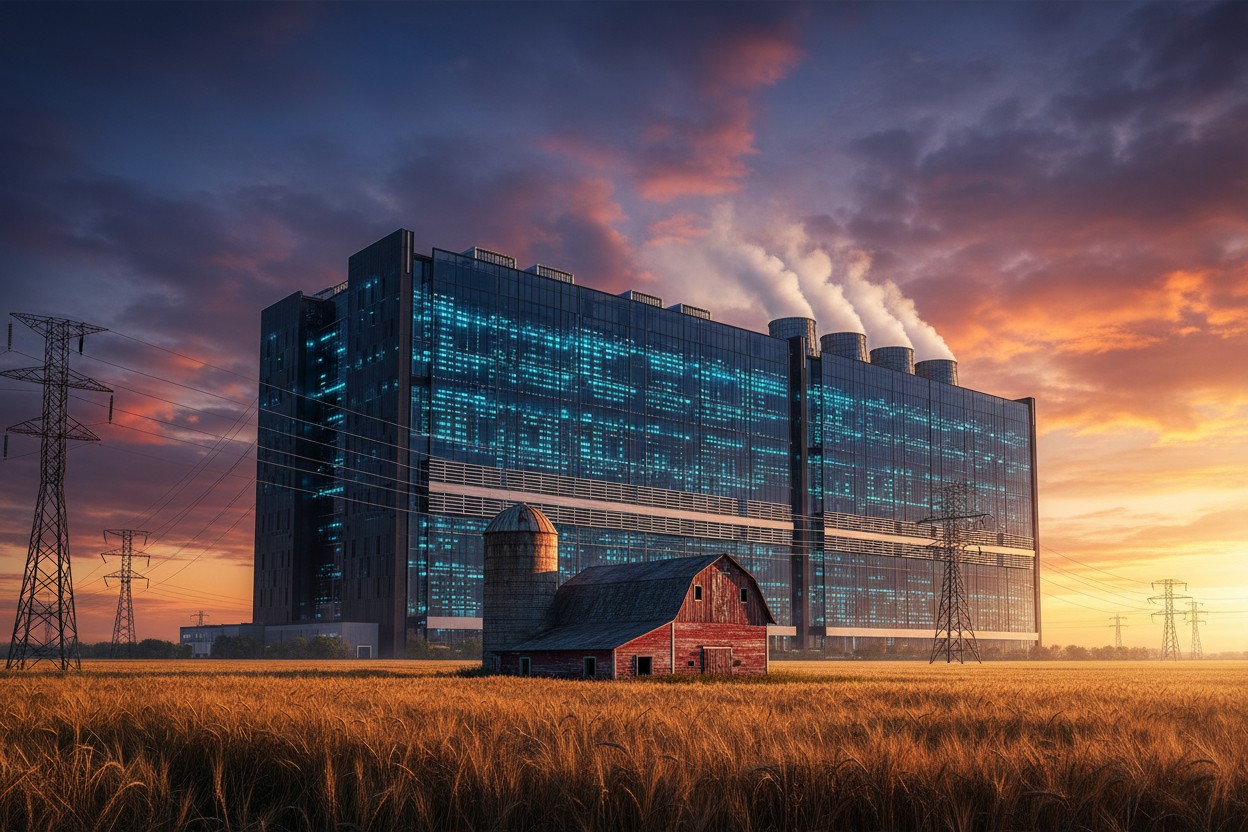
The scale of what is coming is difficult to overstate. Companies are building data centers at a pace that strains local grids. Manufacturers are re-shoring operations after decades of offshoring. Entire sectors of the economy are being electrified including transportation and industrial processes. Artificial intelligence consumes electricity at levels that surprise even industry insiders. These trends are not slowing. They are accelerating. The Energy Leadership Summit made clear that people in the industry understand this reality but translating that understanding into action remains the challenge.
The permitting process is the single greatest obstacle to building anything in America today. A transmission line that should take two years to permit can languish for a decade. Energy projects face overlapping federal reviews, state challenges and local opposition. Meanwhile China builds coal plants and solar farms at breathtaking speed. The summit featured Members of Congress emphasizing the need to expand all forms of energy and White House officials highlighting manufacturing priorities. But the disconnect between rhetoric and results is stark. Industry leaders stressed the need for permitting reform and business certainty. These are not radical demands. They are basic requirements for a functioning energy market.
The national security dimensions of this crisis are under-reported. The United States competes with China for dominance in emerging industries including semiconductors, batteries and AI. All of these require massive amounts of reliable electricity. Without a coherent energy strategy America will cede ground to a competitor that does not suffer from the same regulatory paralysis. The summit brought together people from different industries and backgrounds but there was a shared understanding that delay has consequences. Projects stuck in limbo do not just affect developers. They cost jobs deter investment and chip away at long-term economic growth.
Six discussions that need to take place
1. The Challenge of Surging Energy Demand
The U.S. is entering a period of enormous electricity demand growth, driven by the expansion of manufacturing, the electrification of entire sectors, and the accelerating development of artificial intelligence. Data centers, in particular, require immense power, and the need to convert that power into intelligence is a daunting but crucial task. The fundamental question is whether America can build enough generation, transmission, and infrastructure capacity quickly enough to meet this demand without crippling the economy or compromising reliability. This challenge has shifted the conversation from a narrow focus on climate to a broader one on ensuring energy security and economic competitiveness.
2. The Critical Need for Permitting Reform
A major bottleneck preventing the U.S. from meeting its energy needs is the antiquated and slow permitting process for energy projects. Building a power plant can take five years, and a transmission line nearly eight years, longer than it took the U.S. to win World War II. This bureaucratic gridlock has frozen an estimated $1.5 trillion in critical infrastructure, holding back economic activity and keeping energy costs artificially high. A thoughtful energy conversation must grapple with how to streamline regulations, set hard deadlines for reviews, and prevent legal challenges from being weaponized to indefinitely delay projects, all while maintaining necessary environmental safeguards.
3. The Intersection of Affordability and a Changing Political Landscape
The political and public conversation around energy is shifting, with a strong bipartisan focus on affordability and economic pragmatism. Policies once championed by Democrats, such as carbon taxes and aggressive stances against fossil fuels, are being reconsidered as voters are more concerned about rising energy costs and inflation. In 2026, both Democratic and Republican governors are prioritizing energy affordability, highlighting that lower household energy costs are a primary concern. This has led to a new framing where clean energy is promoted not just for some illusory climate benefits, but for its potential to lower electric bills and create jobs. This suggests a more “all-of-the-above” energy strategy is gaining traction.
4. The Geopolitical and Competitive Dimension
Energy policy is now inextricably linked to national security and global competition, particularly with China. The U.S. is in a “head-to-head race” with China for AI leadership, and that race is dependent on a massive and reliable energy supply. Domestically, American natural gas has played a crucial role in strengthening the country’s energy independence and providing a lifeline to European allies who have cut off Russian gas. A thoughtful discussion must therefore weigh how energy policies affect America’s geopolitical standing, its ability to secure global supply chains for critical minerals and technologies, and its capacity to dominate the industries of the future.
5. Regional Disparities and a “One-Size-Fits-All” Policy
Public attitudes and policy priorities regarding energy differ significantly across U.S. regions, which complicates the creation of a single national strategy. For instance, support for prioritizing clean energy is highest in the Northeast but significantly lower in the Great Plains, where there is greater support for fossil fuel development. This political geography suggests that a uniform federal approach may overlook regional economic realities and dependencies. A more effective and durable energy policy would likely require tailoring strategies to regional economic contexts and preferences, acknowledging that what works in coal-dependent Appalachia may not be suitable for the tech-driven Northeast or the agricultural Great Plains, but both need to be integrated into a national defense energy strategy instead of succumbing to divisive policies that tear down both.
6. Decentralization and Individual Empowerment
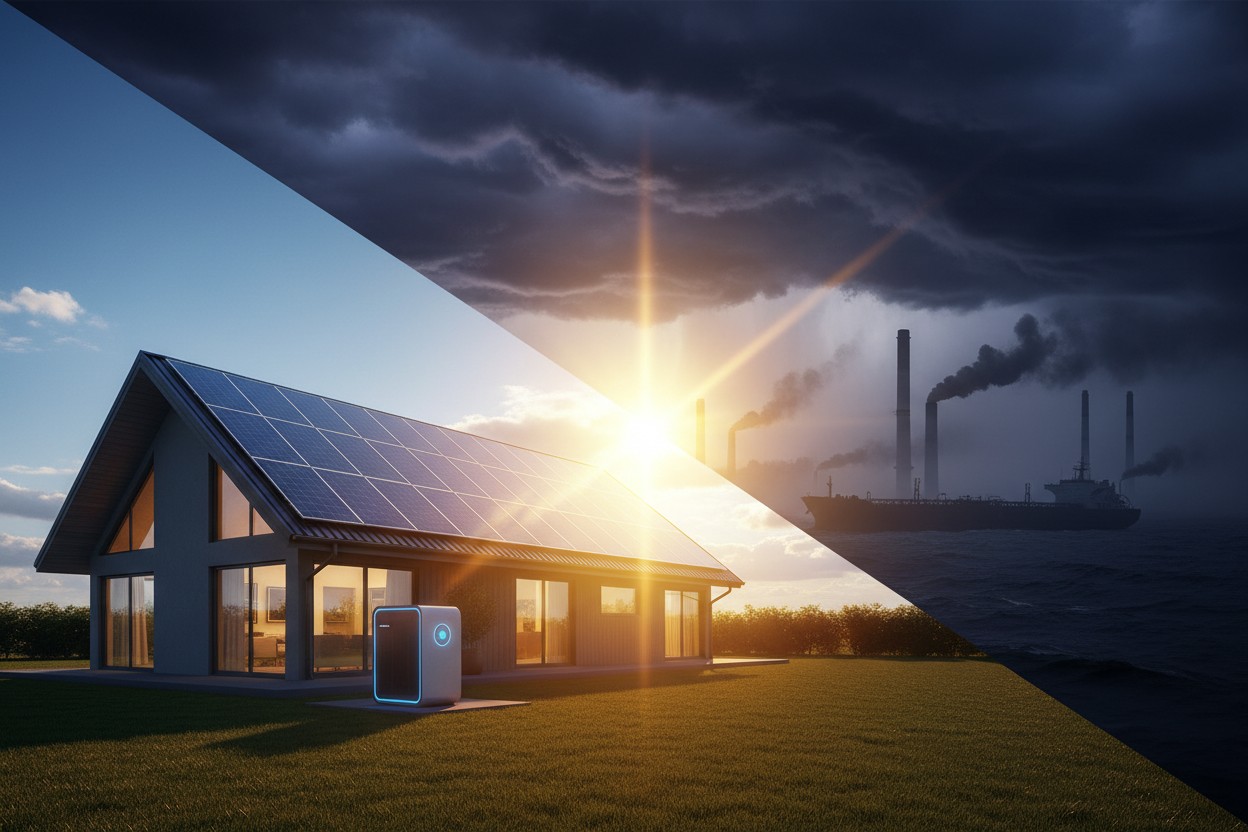
America’s centralized grid, strained by rising demand from AI and extreme weather, requires innovative solutions. Empowering individuals with “off-grid style” systems, like rooftop solar and battery storage, creates a more robust and distributed energy network. Therefore, a case should be made for investing in individual energy decentralization. By empowering individuals with energy security through off grid style systems, we would strengthen national resilience and unlock economic benefits during peak demand, when energy collected, generated, and stored by individuals can be released to the wider grid.
Government incentives are the catalyst to make this transition affordable and widespread. By offering tax credits, grants, and refining net metering policies, the government can significantly reduce upfront costs, enabling more households to generate and store their own power. This directly lowers individual utility bills and protects against grid failures. Furthermore, when aggregated, these individual systems form Virtual Power Plants (VPPs), a powerful, tech-enabled resource that can sell excess energy back to the grid during peak demand, lowering costs for everyone. This approach enhances energy independence, reduces strain on aging infrastructure, and creates a more equitable system by expanding access to clean energy.
Sources include:
Submit a correction >>
Tagged Under:
affordability, clean energy solutions, data centers, decentralization, energy debate, energy independence, energy policy integration, energy security, global competition, national security, natural gas, permitting reform, streamlining regulation, unity
This article may contain statements that reflect the opinion of the author
RECENT NEWS & ARTICLES